
The Hidden Gardens of Paris - Summer 2026
Paris rewards those who look twice. The city's most celebrated gardens — the Luxembourg, the Tuileries, the Champ de Mars — welcome millions of visitors each year. Hidden in plain sight, however, are the city's lesser-known urban gardens. For Parisians and travelers alike, these spaces offer respite from the summer heat and a quieter way to engage with French heritage. Here are three we return to again and again.
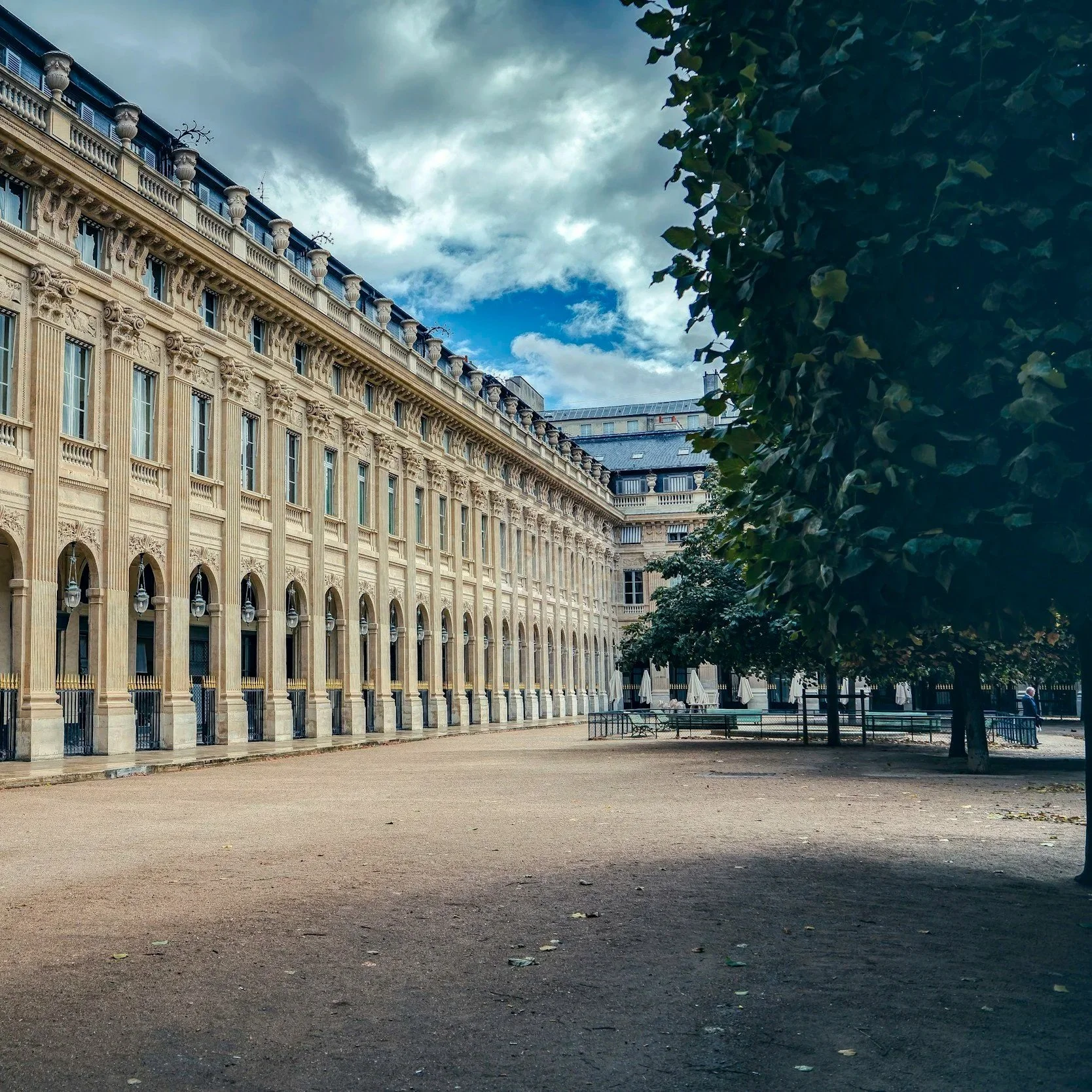
The Palais-Royal — Where Garden Strolling Inspired Shopping
Few places in Paris carry as many layers of history as the Palais-Royal. Built for Cardinal Richelieu in 1633 and later given as a gift to the young Louis XIV, it became one of the city's most vibrant public spaces. By the eve of the Revolution, arcades sheltered booksellers, curiosity cabinets, boutiques and restaurants surrounding gardens designed by Claude Desgots, André Le Nôtre's nephew. The address was so fashionable that it was here, in 1776, that a young Marie Grosholtz — later known to the world as Madame Tussaud — first exhibited her wax figures alongside her mentor Curtius, decades before opening her famous museum in London. Today, four double rows of clipped linden trees frame a peaceful central lawn and fountain, offering a haven of green in the 1st arrondissement.
It is not only the garden that draws visitors today. In the adjoining Cour d'Honneur, Daniel Buren's Les Deux Plateaux — 260 black-and-white striped marble columns of varying heights, installed in 1986 — provoked a national scandal when it opened. Nearly forty years on, it has become one of the most photographed spots in the city. The contrast between the garden's classical restraint and this joyful contemporary artwork is, in itself, a lesson in how Paris has always negotiated past and present.
Address: 6 rue de Montpensier, 75001 Paris. Gardens open daily; summer hours until 10:30 pm.
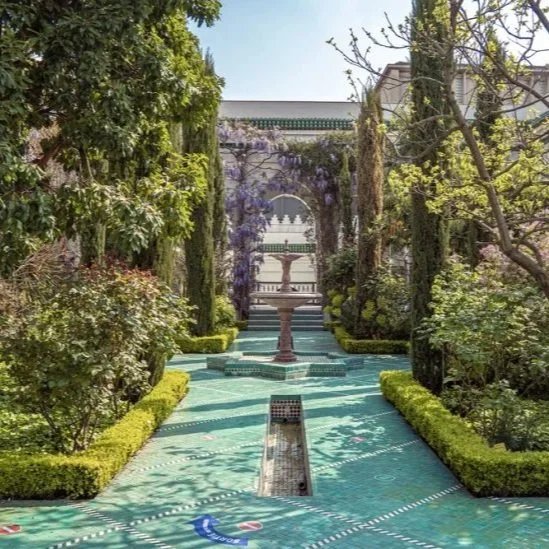
The Garden of the Grande Mosquée de Paris — An Unexpected Orient
Steps from the Jardin des Plantes and the Arènes de Lutèce, the Grande Mosquée de Paris offers one of the most surprising garden experiences in the city. Built in the 1920s as a tribute to the North African Muslim soldiers who fought for France in the First World War, the mosque and its courtyard transport you instantly to another world: mosaic-tiled walls in turquoise and cobalt, a central fountain, lush Mediterranean planting, and the minaret rising above it all. The garden is small but immersive — and it connects seamlessly with the mosque's celebrated salon de thé, where mint tea and Moroccan pastries make for an ideal pause. It is the kind of place that reminds you how many stories Paris holds, and how rarely the well-trodden tourist path reaches them.
Address: 2 bis place du Puits-de-l'Ermite, 75005 Paris.
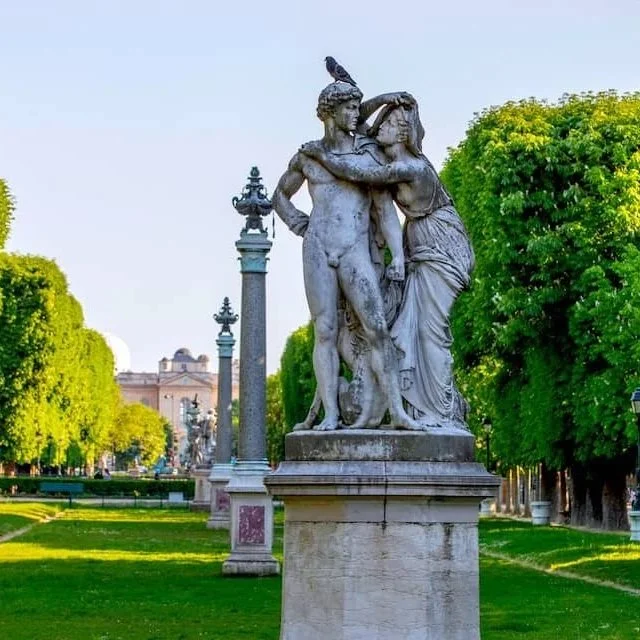
The Jardin des Grands Explorateurs — The Luxembourg's Secret Neighbour
Most visitors to the Luxembourg Gardens never notice that the garden continues south, beyond the place André-Honnorat and down the avenue de l'Observatoire. The Jardin des Grands Explorateurs — named for Marco Polo and the French explorer René-Robert Cavelier de La Salle — was created in 1867 as a natural extension of the Luxembourg, and its regulars affectionately call it the petit Luco. While the Luxembourg draws the crowds, this two-hectare garden offers the same chestnut-lined allées and the same Left Bank atmosphere, in near-total tranquility. Its centrepiece is unmissable: the Fontaine des Quatre-Parties-du-Monde, a monumental bronze fountain designed by Jean-Baptiste Carpeaux and Gabriel Davioud in 1875, in which four figures representing the continents of the world support a celestial sphere above leaping horses and sea creatures. It is, in our view, one of the finest sculptures in Paris — and one of the least visited.
Address: Avenue de l'Observatoire, 75006 Paris.
→ Continue exploring: The Hidden Gardens of Paris
Inspired to see these spaces through an expert's eyes? Join us for a private guided experience in the gardens of Paris.